A full psychiatric evaluation can run past ninety minutes, covering a mental status exam, a risk assessment, and a full medication history in one sitting. Try turning that into a note afterward, and you’ll understand why so many mental health clinics are now searching for the best AI scribes for psychiatry, tools that listen during the session and hand back a structured note instead of eating into the time between patients.
Not every AI scribe for psychiatry works the same way; some are general medical tools stretched to fit mental health, others are built around risk documentation from day one.
This guide walks through what separates the two and compares a few tools clinics are actually testing in 2026.
What Makes an AI Scribe Suited for Psychiatry?
Most ambient scribes were built for a fifteen-minute primary care visit. Chief complaint, brief exam, plan. Psychiatry rarely fits that mold.
A single medication management visit can cover a symptom history, a side-effect check, and a safety conversation, all inside one session. The note still has to capture every part of it, clearly.
That’s where a lot of general-purpose tools fall short. A good AI medical scribe for psychiatry needs to do three things well:
- Recognize when the conversation has moved into mental status territory, and separate affect, mood, and thought process instead of folding it all into one vague summary
- Handle risk language with precision. There’s a real difference between a patient describing passive thoughts of not wanting to be here and one describing an active plan with intent
- Support therapy-specific note formats, not just SOAP, since many visits blend medication management with a psychotherapy component
Get any one of these wrong, and the clinician ends up rewriting half the note anyway. Psychiatry AI scribe software is only useful if it understands the difference between a visit and an exam.
Best AI Scribes for Psychiatry in 2026
Five tools stand out this year for how they handle psychiatric documentation, though they’re built for fairly different corners of the field.
Here’s how each one actually works.
HealthOrbit AI
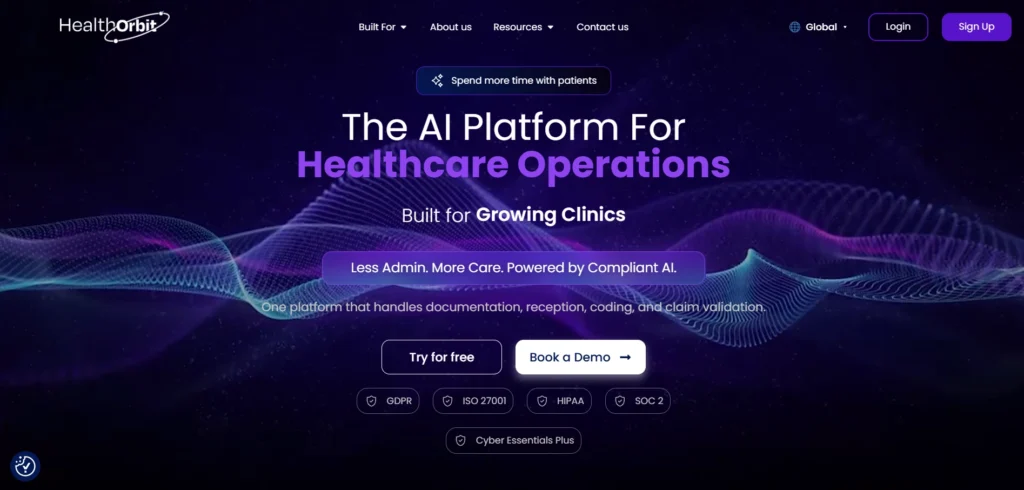
HealthOrbit AI’s ambient scribe listens during the consultation and writes the note as you talk, in your usual format, done by the time the patient’s out the door. It doesn’t finalize anything on its own, though. The note sits in draft until the clinician actually reads it and signs off. That’s the whole point, really: it’s writing down what happened, not deciding what happens next.
Where mental health fits in
It’s positioned for community-based mental health work alongside district nursing, hospice, and home visits, and built to keep working on a phone with no signal, syncing once connection returns. That matters for psychiatric teams doing home visits or outreach where a stable connection isn’t guaranteed.
A specialty doctor at Navigo Health & Social Care described how letters that previously took two to three hours now take under one, with accurate capture across different accents. That’s a client testimonial published on HealthOrbit’s own site, not an independent study, so it’s a data point, not proof.
Where it helps with language barriers:
Psychiatric intake often surfaces the first time a language gap actually affects care, since tone and word choice carry as much clinical weight as the facts being reported.
- Ambient listening captures multilingual conversations in real time
- Relevant for psychiatric intake and ongoing care where the patient and clinician don’t share a first language
On compliance, the platform is listed on a national ambient voice technology supplier registry, with certifications spanning data protection, information governance, and clinical safety standards, and data is processed and stored in the region.
PMHScribe
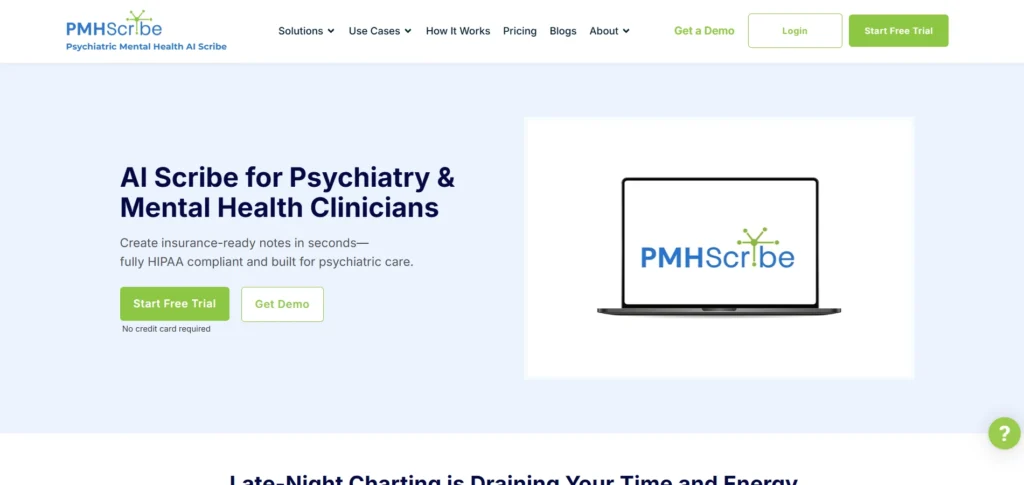
PMHScribe captures the full mental status exam, risk assessment, and medication management, plus a separate psychotherapy add-on note when a visit includes both, and automatically switches between SOAP, DAP, BIRP, psychiatric intake, and crisis assessment formats based on session type. Worth flagging: its documentation and billing logic, right down to a specific therapy billing code it says covers its own monthly cost, is built entirely around the US payer system, a real limitation for a clinic operating under a different framework.
JotPsych
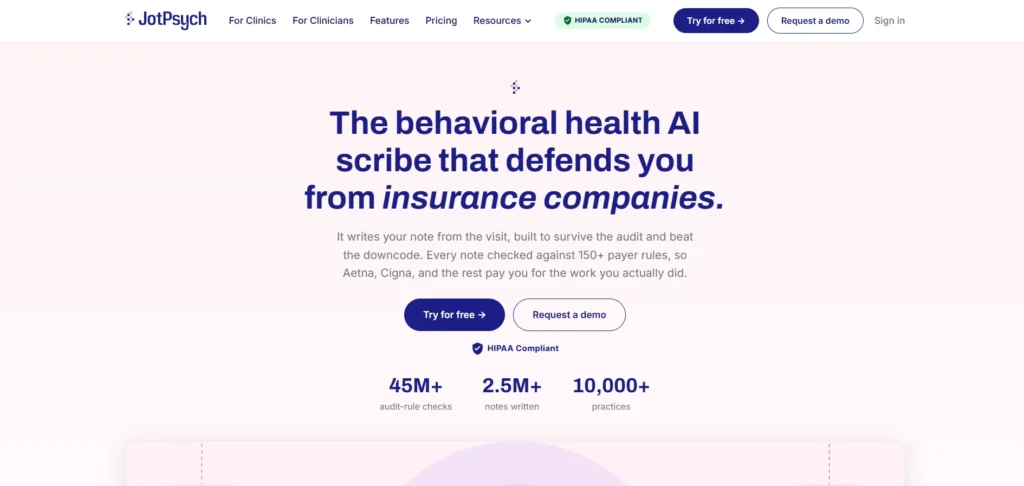
JotPsych is built specifically for behavioral health documentation and billing, with templates covering psychiatric intakes, medication follow-ups, and group therapy, automatically working out ICD-10, DSM-5-TR, and CPT codes from the encounter. Like PMHScribe, its audit and coding tools are built around the US payer system, so clinics operating under a different framework will find that layer doesn’t translate directly.
Blueprint
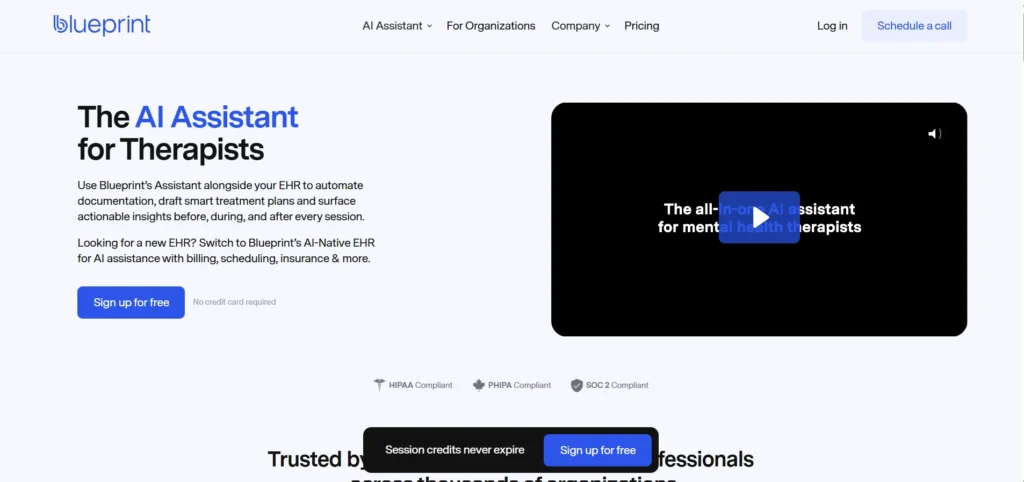
Blueprint is a therapy documentation platform, not built for psychiatric prescribing. It supports SOAP, DAP, and BIRP note formats alongside treatment plans, paired with a free EHR covering scheduling and billing. Useful for the therapy side of a mixed practice, but it won’t cover mental status exams or medication management documentation, and its compliance framework is built around HIPAA specifically.
Mentalyc
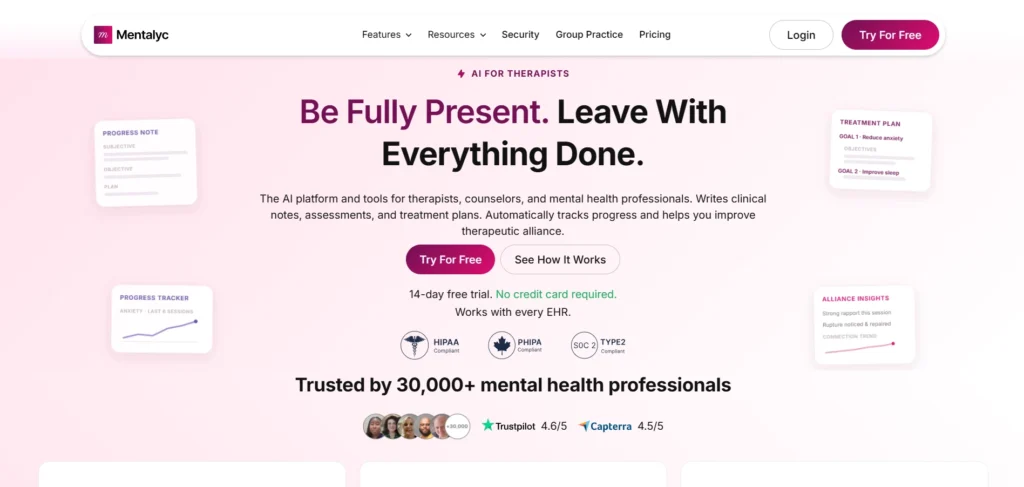
Mentalyc is a mental health AI scribe built for therapists, drafting progress notes and treatment plans from session audio and tracking progress directly from clinical content rather than relying only on self-report scales. Like Blueprint, it’s built for therapy documentation, not psychiatric prescribing, so it won’t cover mental status exams or medication management. Its compliance framework covers HIPAA and SOC 2 Type II, with client data excluded from model training.
Why Psychiatric Notes Need More Than a Generic SOAP Format
A general SOAP note fits a straightforward physical complaint. Psychiatric visits carry more: affect, thought process, risk level, and treatment response, all needing their own language. This is exactly why the best AI scribes for psychiatry build in MSE and risk-assessment structures instead of forcing every visit into the same four boxes.
Precision matters most in risk documentation. A vague note doesn’t just look sloppy; it creates a real problem if that note is ever reviewed after an adverse event.
Compliance Considerations
A scribe can be excellent and still wrong for you if it was built around someone else’s rulebook. Psychiatric notes get held to a stricter standard than routine visit notes, so before signing anything, get real answers on these:
- Where the data actually lives
- Whether the certifications on the sales page are ones your regulator recognizes
- Whether the billing logic assumes a payer system you don’t use
That last one catches people off guard most. A scribe can generate flawless codes and still be coding for the wrong country’s insurance model. None of the best AI scribes for psychiatry are universally “best”; they’re best for the rules they were built around.
Red Flags to Watch For
A few things tend to separate a solid tool from one you’ll regret in six months:
- No clear answer on where audio or transcripts are stored, or how long they’re kept
- Templates that feel bolted onto a general medical scribe instead of built for psychiatric documentation
- Vague language around risk assessment, like the vendor hasn’t actually thought about what a missed detail could cost
- Pricing or coding logic that only makes sense for one country’s insurance system, with no mention of anywhere else
- No free trial or pilot period, which usually means they’d rather you commit before you notice the gaps
If a sales call can’t give you straight answers on any of these, that’s the answer. The best AI scribes for psychiatry don’t need a founder’s story to convince you; the notes speak for themselves.
How to Shortlist the Right Fit
Skip the demo for a minute. Write down what a normal Tuesday in your clinic looks like: med checks, intakes, the occasional crisis call; then test tools against that instead of a features page. Book a trial and run a real session through it, one with interruptions and tangents, and ask to see an actual risk-assessment note, not a bullet point promising it handles risk well.
Most clinics don’t land on one of the best AI scribes for psychiatry because it scored the highest on a comparison chart. They land on it because it survived a real Tuesday afternoon, which is really the only benchmark worth trusting.
There’s no single winner here, just the tool that fits how your clinic actually works.
Ready to see how this works for your own caseload? Try HealthOrbit AI’s ambient scribe and test it against a real session before you decide on anything.
Sign up to start using HealthOrbit AI’s ambient scribe today.
FAQs
What is the best AI scribe for psychiatry?
Depends who’s asking. A prescriber needs risk documentation done right; a therapist needs the note to sound like therapy. Figure out which one you are first.
Are AI scribes for psychiatry secure enough for sensitive mental health notes?
The established ones, yes. But “HIPAA compliant” gets slapped on landing pages loosely. Ask what certifications they actually hold.
Can an AI scribe document a mental status exam and risk assessment?
A few do this properly. Most just wedge a generic template around it. You’ll know which one within a session.
Do AI psychiatry documentation tools work for therapy sessions too?
Some do both well. Most pick a side, usually prescribing, and treat therapy as an afterthought.