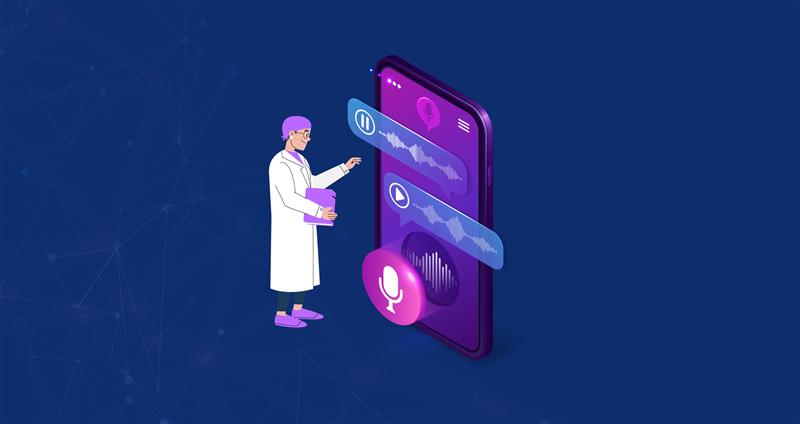
Ever wish your voice assistant just understood you? No endless clicking. No tab-hopping. Just you, talking — and things getting done.
That’s not sci-fi anymore. It’s 2025, and your voice is finally doing what your fingers have done for years: managing your work, organizing your notes, and yes, even documenting patient consults. At the core of this transformation? The Technology Behind Voice AI, a powerful combination of speech recognition, natural voice recognition, and smart assistant logic.
But let’s be real: not all voice tools are created equal. Some just repeat what you say. Others? They understand it and act. If you’re using voice at work, especially in fast-paced clinical or administrative environments, you’ll want to know what’s going on behind the mic.
What Makes a Voice Assistant Useful?
The best voice tools don’t just hear you — they get you. Accuracy is only part of the equation. In the case of your assistant being unable to decipher your instructions, quell the surrounding noise, and run in offline mode when the Wi-Fi dips, you will be screaming at your computer all over again.
Therefore, the concept of Technology Behind Voice AI is extremely essential. By 2025, approximately 20.5% of the world will use voice search, having nearly 8.4 billion voice assistants in active use, with the number of devices per person exceeding the global population. What makes something “wow” instead of just “meh”?
- It understands everything you say, even if you’re speaking fast or have an accent.
- It also filters out the background noise of a chatty clinic or loud office.
- Integrates with tons of the tools you know (EHRs, calendars, billing apps).
- Doesn’t freeze or crash when complex terminology is thrown at it.
The Core of It All: AI and Voice Recognition Technology
Let’s look under the hood and understand what’s happening behind every spoken command. This is where the technology behind voice AI shines.
Speech Recognition
This is the “ear” of the system. It converts your spoken words into written text in milliseconds. But it doesn’t just transcribe—it adapts to voice patterns, tone, and language variations. In noisy environments like hospitals or busy offices, this accuracy is crucial.
Natural Voice Recognition
Once the system hears you, the real magic begins. Natural voice recognition interprets not just what you say, but how you say it. It recognizes tone, intent, and urgency. For instance, “I need to update his record right now” carries a different weight than “Can you check his last entry?”
This human-like understanding sets apart advanced assistants like HealthOrbit’s from generic tools that just mimic voice commands.
Natural Language Processing (NLP)
This is the “brain” of the system. NLP breaks down sentences into actionable data. If you say, “Schedule a post-op check for Thursday,” the assistant understands:
- The task is scheduling
- The event is a post-op review
- The date is Thursday
No tapping. No typing. Just smart comprehension.
Intent Detection & Context Awareness
And this is where the system becomes intelligent: A premium AI assistant not just executes one command at a time. It keeps track of context, so when you say, “Also send his records to cardiology,” the assistant will be able to tell that you are still talking about the same patient.
Is Voice AI Secure for Healthcare Use?
Security is not a feature in healthcare-it’s a foundation. Upon adoption of AI and voice recognition tools in a clinical workflow, the first question must be: Is it safe for the patient? And here is the good news: Modern AI assistants are being built with healthcare considerations in mind and not just convenience. Therefore, things like data encryption, access control, and health privacy regulations like HIPAA are the order of the day.
Top Voice Command Apps in 2025 aren’t just dictation tools anymore. They combine AI and voice recognition, smart workflow support, and natural voice recognition that understands your intent — not just your words. That’s what separates a basic mic from a real AI-based assistant. A good voice tool can:
- Integrate with complex software (like EHRs or billing systems)
- Multitask across multiple windows or programs
- Stay secure and compliant (think HIPAA-ready)
Quick Comparison: Smart Voice vs Basic Voice
Let’s keep it simple.
| Feature | Basic Voice Tool | HealthOrbit AI-Style Smart Voice |
| Dictation | ✔️ | ✔️ |
| Understands medical terms | ❌ | ✔️ |
| Creates SOAP Notes | ❌ | ✔️ |
| Triggers tasks (e.g., schedule follow-ups) | ❌ | ✔️ |
| Learns your habits over time | ❌ | ✔️ |
| HIPAA-compliant | ❌ | ✔️ |
| Background listening (ambient) | ❌ | ✔️ |
If all you need is a glorified microphone, any voice tool will do. But if you’re aiming to reduce admin and make your work easier, that’s where AI and voice recognition in HealthOrbit AI’s assistant steps in.
Why HealthOrbit AI Leads the Pack in Voice Tech?
HealthOrbit AI isn’t just another digital tool — it’s a smart clinical companion built with healthcare users in mind. Here’s what sets it apart:
- Built-in medical vocabulary
- Specialty-specific NLP tuning
- Privacy-focused integration
- Seamless EHR and system connectivity
- Easy onboarding for teams
Whether you’re a solo practitioner or part of a large clinic, HealthOrbit AI offers all the tools you need to bring the best AI-based assistant right to your fingertips — no steep learning curve required.
Final Thoughts: Speak Up, Get More Done
The days of voice tools being a gimmick are over. Clinicians, therapists, administrators — even IT leads — are using The Technology Behind Voice AI to cut hours off their week, improve documentation, and get through tasks without fighting the keyboard.
Looking to bring voice tech into your clinic, office, or team?
Start with the only tool designed for your workflow — a smart, secure, and natural AI and speech recognition in HealthOrbit’s assistant.
FAQs
What is The Technology Behind Voice AI?
It’s the combination of speech recognition, NLP, and smart assistant logic that allows voice tools to understand, process, and act on spoken commands in real time.
How is HealthOrbit AI different from regular voice assistants?
Most voice tools just transcribe. HealthOrbit AI understands your workflow — capturing notes, triggering tasks, and handling medical terminology with accuracy and security.
Is voice AI secure for handling patient data?
Not all voice tools are, but HealthOrbit AI is HIPAA-compliant and built with privacy in mind. It’s safe for clinics, hospitals, and solo practitioners.
Can I use HealthOrbit AI on mobile, too?
HealthOrbit AI is optimized for different platforms — where most clinical and administrative work happens — but mobile compatibility is in development.