

Healthcare organisations work tirelessly to deliver quality patient care, but many are quietly losing money they’ve already earned. Revenue leakage in healthcare is one of the most persistent and costly financial challenges facing hospitals, clinics, and medical practices. Unlike bad debt, this is revenue tied to real services delivered that never gets fully collected. It slips away through denied claims, underbilling, documentation gaps, and inefficient billing workflows — often going undetected until finance teams spot worsening cash flow, rising write-offs, or growing rework.
The good news is that revenue leakage is not a “mystery loss.” In most organisations, it comes from repeatable patterns across revenue cycle management (RCM) — which means it can be measured, reduced, and prevented with the right controls.
What Is Revenue Leakage in Healthcare?
If you’re searching for what revenue leakage is, here’s a clear revenue leakage definition for healthcare: it’s the loss of legitimately earned reimbursement due to breakdowns across the revenue cycle — before, during, or after a claim is submitted.
Think of it as revenue that should have been captured (or defended) but wasn’t. Leakage isn’t a single department’s problem. It can start with scheduling and eligibility, show up in documentation and coding, and finish as denied claims, missed charges, underpayments, or delayed follow-up.
The challenge is that leakage rarely announces itself. It accumulates silently across hundreds of daily transactions, buried inside small errors, mismatched data, or payer requests that never get resolved. That’s why revenue leakage analysis matters: it helps you spot the leaks early, before they become routine.
The Biggest Causes of Revenue Leakage in Healthcare
Claim denials (and the rework no one has time for)
Denials are one of the biggest “leak points” across RCM. A claim can be clinically correct, but still fail due to documentation gaps, missing authorisation details, eligibility errors, or coding mismatches. Denials don’t just delay revenue — they create operational drag. When teams are stretched, denials are more likely to be written off or left unworked, turning temporary issues into permanent leakage.
A robust denial strategy is not only about appeals. It’s about prevention: reducing avoidable denials at the point of documentation, coding, and submission — where the cost to fix is lowest.
Underbilling and undercoding (the “silent loss”)
Underbilling is often more damaging than people realise because it doesn’t always trigger a denial. It’s revenue that simply never gets billed in the first place — or gets billed at a lower level than the care delivered.
Common underbilling patterns include:
- Procedures or supplies used but not captured in the charge process
- Time-based services are documented inconsistently
- Coding that doesn’t reflect the true complexity of the encounter
- Missed add-on codes, modifiers, or supporting documentation
This is where revenue leakage examples show up in everyday workflows: the claim gets paid, but at a lower rate than it should, and nobody notices unless you compare clinical activity against charges and payments.
Poor clinical documentation (where denials and downcoding begin)
Inaccurate or incomplete documentation sits at the root of many denial and underpayment issues. If the clinical story doesn’t clearly support medical necessity, diagnoses, procedures, or complexity, payers have room to deny, downcode, or request more information.
Clinical Documentation Integrity (CDI) programmes exist to close this gap, but CDI can’t scale if it depends only on manual review. Modern RCM needs practical, real-time support that helps clinicians document the first time correctly — without adding friction.
Prior authorisation and pre-service breakdowns
Prior authorisation issues remain a consistent driver of preventable denials and write-offs. Even when authorisation is obtained, missing reference numbers, mismatched services, late approvals, or incomplete documentation can trigger denial outcomes that are hard to overturn later.
These failures often begin upstream — at scheduling, intake, or order management — and cascade into back-end leakage that billing teams can’t fully recover.
Underpayments and contract non-compliance
Not all leakage comes from provider-side errors. Underpayments happen when payers apply incorrect fee schedules, policy edits, or inconsistent contract logic — and providers don’t detect it fast enough.
If you’re not monitoring expected vs actual reimbursement by payer, plan, and service line, underpayments can repeat for months. That’s why contract variance checks belong in your ongoing revenue leakage prevention toolkit, not just annual contract reviews.
Revenue Leakage Examples You’ll Recognise
Here are realistic revenue leakage examples across the RCM cycle:
- A claim is denied for “insufficient documentation.” → The team is overloaded → appeal window closes → Revenue is written off.
- A procedure occurs, but a related supply isn’t captured → no denial happens → reimbursement is permanently lower.
- Eligibility data is inaccurate at registration → claim bounces → multiple resubmissions delay payment and increase cost-to-collect.
- A payer underpays a common service line → no variance monitoring exists → the same underpayment repeats across hundreds of claims.
Revenue Leakage Detection: Why AI is Becoming the Practical Option
Manual audits and work queues can catch some issues, but they struggle with scale — especially when payer rules change frequently, and claim volumes stay high. This is why revenue leakage detection is increasingly moving toward automation and AI-driven approaches: identifying patterns, flagging anomalies, and predicting risk earlier in the workflow.
In healthcare, AI-driven detection often focuses on:
- Pre-bill checks that flag documentation-to-code misalignment
- Claim risk scoring (which claims are most likely to be denied)
- Repeat-pattern discovery (payers, service lines, denial reasons)
- Underpayment variance detection against expected reimbursement
HealthOrbit’s Claim Scrubber fits directly into the detection workflow. Rather than waiting for a denial to arrive, it helps validate claims before submission by flagging common payer-facing issues such as bundling conflicts, frequency limits, modifier mismatches, and diagnosis-code alignment risks. The outcome is fewer avoidable denial cycles, less rework for billing teams, and faster cash realisation — without adding operational burden.
Revenue Leakage Prevention: A Practical Guide That Works
Effective revenue leakage prevention is not a one-time initiative. It’s an operating discipline built into day-to-day RCM.
Strengthen front-end controls. Eligibility, registration accuracy, and prior authorisation discipline prevent errors before they enter the claims process.
Make denial prevention measurable. Track clean claim rate, first-pass denial rate, denial reasons by payer, denial dollars (not just denial counts), and overturn rates. Use that data to stop repeat denials at the source.
Run continuous revenue leakage analysis. Don’t rely only on quarterly audits. Use ongoing dashboards and targeted sampling that link documentation → coding → claim outcome → payment variance.
Use automation where humans can’t scale. Let AI handle pattern scanning and prioritisation, so your teams focus their time on the highest-impact leaks.
Close the documentation-to-billing loop. Give clinicians and coders specific feedback quickly — not generic “documentation insufficient” messages weeks later.
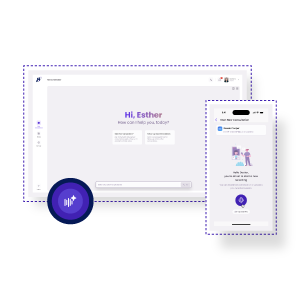
This is where HealthOrbit’s AI Scribe addresses one of the most upstream causes of revenue leakage: incomplete and inaccurate clinical documentation. It captures doctor–patient conversations in real time and helps produce accurate, structured documentation that can integrate into your workflow. When clinicians document correctly at the point of care, teams see fewer documentation gaps, fewer CDI queries, and coding that better reflects the true complexity of care delivered, which reduces downstream denials and underbilling risk.
Final Thoughts
Revenue leakage in healthcare is rarely caused by one dramatic failure. It’s the slow drip of denials that don’t get appealed, underbilling that never gets noticed, documentation gaps that invite payer pushback, and underpayments that repeat because no one is monitoring the variance.
The goal isn’t “collect more.” It’s to collect what you’ve already earned — consistently, defensibly, and with less rework.
Ready to reduce revenue leakage without adding workload?
HealthOrbit AI helps providers strengthen documentation at the point of care, support accurate coding, and validate claims earlier in the workflow — so fewer errors reach the payer in the first place. Book a quick demo.
Frequently Asked Questions (FAQs)
What is the most common cause of revenue leakage in healthcare?
Claim denials are the most visible driver, but most trace back to upstream failures — incomplete documentation, eligibility errors, or coding mismatches. Effective prevention means fixing the source, not just managing the denial queue.
How is underbilling different from a claim denial?
A denial is visible — the claim is rejected and flagged for review. Underbilling is silent. The claim gets paid, but at a lower rate than the care warranted. No alert is triggered, which is why it often goes undetected for months.
How can AI help reduce revenue leakage in healthcare organisations?
AI tackles leakage at both ends of the revenue cycle. HealthOrbit AI Scribe captures accurate clinical notes at the point of care, reducing documentation gaps that cause denials. HealthOrbit’s Claim Scrubber then validates batches against payer logic before submission, catching bundling errors and frequency violations before they become rejections.
Which healthcare specialties are most affected by revenue leakage?
Every specialty is at risk, but emergency medicine, radiology, oncology, and behavioural health see the highest denial and underbilling rates. Surgical specialties lose revenue through missed add-on codes and unbilled supplies, while primary care is especially vulnerable to undercoding from documentation that doesn’t reflect encounter complexity.
What key metrics should we track to monitor revenue leakage?
Focus on clean claim rate, first-pass denial rate, days in AR, net collection rate, and payment variance by payer. A declining net collection rate paired with rising AR days is typically the earliest sign that leakage is growing beneath the surface.