The development of clinical documentation is advancing with time. In 2026, healthcare professionals are finally reclaiming their time. Instead of spending evenings finishing notes or clicking endlessly through EHR screens, clinicians are turning to AI scribes. It results in more eye contact with patients, smoother workflows, and far less burnout at the end of the day.
This article compares the top AI medical scribe of 2026. We touch on features, pricing, EHR compatibility, and real-world use cases. We are here to assist you in making a decision, regardless of whether you are operating a small clinic or a growing practice.
AI Scribe Software Comparison: Choose the Best One
Before choosing from the Top AI Scribes, it helps to step back and look at your daily reality. Start with your biggest pain points. Are clinicians spending hours finishing notes after clinic? Is visit volume high enough that documentation delays affect patient flow? These questions matter more than feature lists. It’s also important to review EHR integration early. Thus, we have arranged the AI scribes’ pricing and features in the given table for better understanding.
| AI Scribe | Pricing (Approx.) | EHR Compatibility | Best Fit |
| HealthOrbit AI | £33 per month and a customized plan. | Works with major EHRs through browser-based workflows and integrations | Clinics seeking accuracy, clinician control, and flexible documentation |
| Abridge | $208 per clinician/month | Deep Epic integration | Epic-based enterprise healthcare systems |
| DeepScribe | $750 per clinician/month | Epic, athenahealth, eClinicalWorks, AdvancedMD | Oncology and Cardiology-focused organizations |
| Freed AI | $84 per clinician/month (annual billing) | Browser-based EHR push (Beta) | Small to midsized practices (2–50 clinicians) |
| Sunoh.ai | $149 per user per month | Integrates with select EHR platforms | Large practices and health systems |
| Nuance DAX | $369 and $600 per provider per month. | Epic and Meditech | Hospitals and enterprise health systems |
| Lindy | starts with $49.99/month | Limited or indirect EHR support | Individuals and small teams experimenting with AI scribes |
Top AI Medical Scribe Tools in 2026
Not all top AI scribes are the same. Others are aimed at enterprise systems; some are aimed at independent clinics. The following are the Best AI scribes in 2026 that you should check:
1. HealthOrbit AI
Best for growing clinics needing accuracy and clinician control.
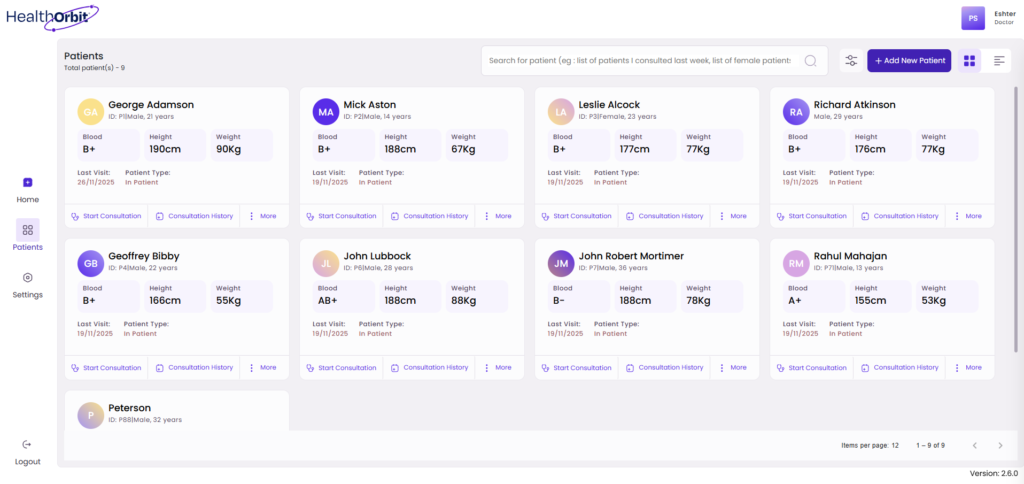
Pricing: Starts with £33 per month and offers custom pricing.
HealthOrbit AI is aimed at those clinics that require speed and do not lose control. It provides profound EHR integration and compatibility. It suits best with primary care, specialty clinics, and expanding practices that require effective documentation. It also pairs naturally with its dedicated AI Medical Scribe service, making documentation feel effortless.
Key Features
- Real-time ambient clinical documentation
- Structured, review-ready SOAP notes
- Seamless EHR integration
- Customizable templates for specialties and workflows
- HIPAA & HITECH compliant, no audio storage
- Automated clinical letters and ICD-10 coding
- Analytics dashboard for workflow and accuracy
Pros
- Designed for real clinical workflows
- Strong accuracy checks
- Flexible for small and mid-size practices
- Multi-device support (desktop, tablet, mobile)
Cons
- Custom pricing may not suit one-size-fits-all buyers
2. Abridge
Best for Epic-based hospitals and enterprises
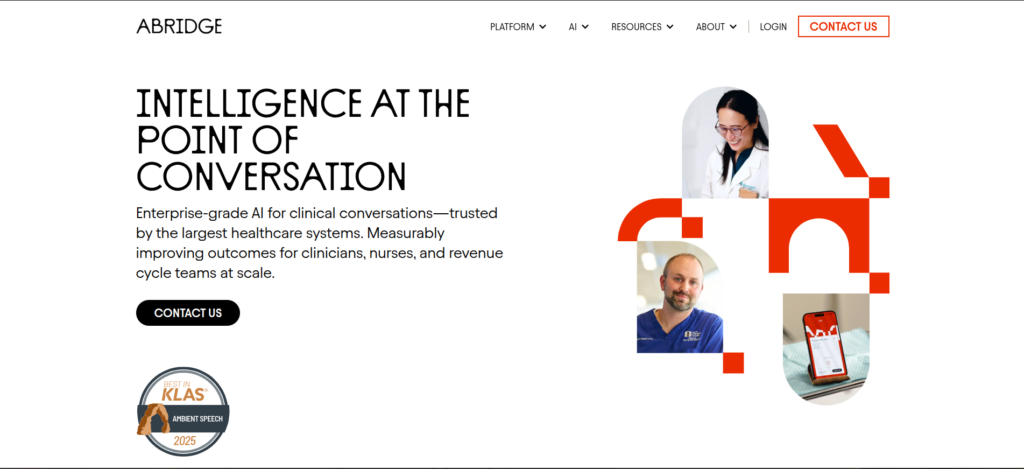
Pricing: Abridge pricing charges $208 per clinician per month.
Abridge is targeted at big organizations and hospitals. It records hierarchical discussions and converts them into notes in bulk. It is compatible with the large EHRs and complies on an enterprise level. Abridge is appropriate for workflows that already have an established IT support and big provider teams.
Key Features
- Generative note creation from clinical conversations
- Deep Epic EHR integration
- Enterprise-level deployment and governance
- Usage analytics and reporting
- Single sign-on (SSO) for large organizations
- Built for Epic-based health systems
Pros
- Strong for large systems
- Good EHR compatibility
Cons
- Less flexible for small practices
- Higher cost
3. DeepScribe
Best for oncology and cardiology practices.
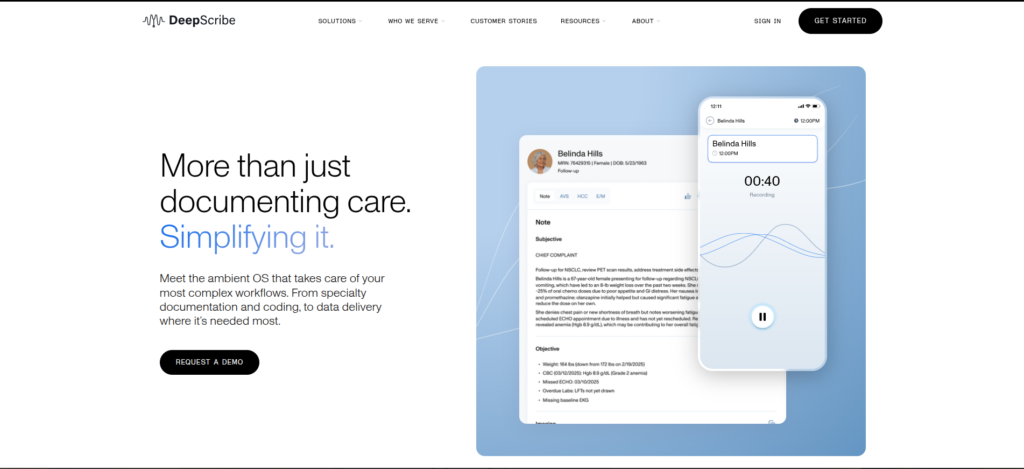
Pricing: DeepScribe pricing is estimated at around $750 per clinician per month.
DeepScribe is perfect for Outpatient clinics and multi-specialty practices. It saves time on documentation since it has advanced features to write the documents. It embraces numerous specialties and provides EHR integrations in order to facilitate the completion of charts.
Key Features
- Ambient documentation with structured clinical notes
- Built-in E&M coding suggestions
- Integrations with Epic, Athena, eClinicalWorks, and AdvancedMD
- Strong focus on billing and compliance
- Designed primarily for Oncology and Cardiology practices
Pros
- Broad specialty support
- Reliable documentation
Cons
- Interface can feel complex
- Pricing adds up for small teams
4. Freed AI
Best for solo and small practices.
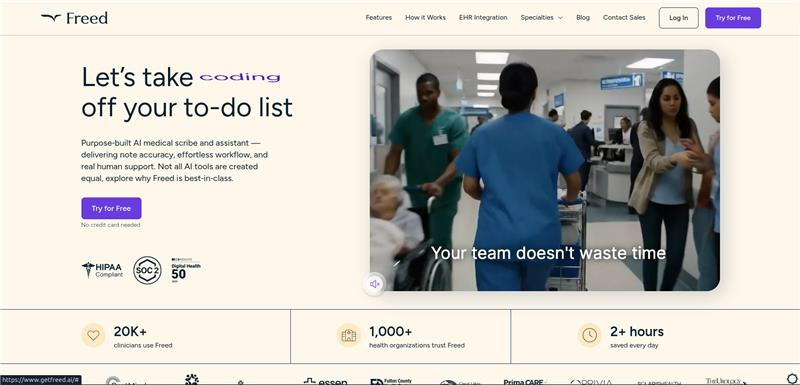
Pricing: $90 per month for a single clinician (annual billing).
Freed AI is one of the AI medical scribe software. It is used by individual practitioners and small practices who desire a basic and fast means of reducing the amount of time spent on charting. It creates notes at rapid speeds with little configuration. It is effective when it comes to regular checkups and normal record-keeping. It has been integrated with popular EHRs but is more speed-oriented than customized.
Key Features
- Real-time ambient note generation
- One-click note push into browser-based EHRs (beta)
- Learns the clinician’s writing style over time
- Generates SOAP notes, visit summaries, ICD-10 codes, and letters
- Works across desktop, mobile, and tablet
- HIPAA and HITECH compliant, with no audio storage
Pros
- Easy to use
- Affordable entry point
Cons
- Limited customization
- Fewer advanced features
5. Sunoh.ai
Best for primary care and specialty clinics.
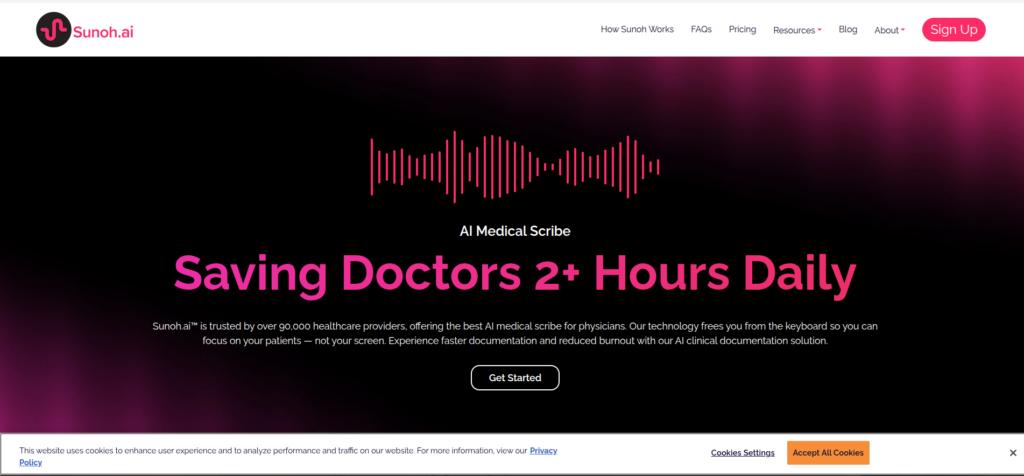
Pricing: $149 per user per month.
Sunoh.ai focuses on ambient documentation, generating structured and review-ready notes. It facilitates the integration with EHR systems and various specialties to minimize handwriting. It is suited to the clinics that desire ambient listening and do not want to be overburdened with workflows. Sunoh.ai serves primary care and specialty practices, particularly where consistency is an issue.
Key Features
- Ambient documentation with structured outputs
- EHR integration support
- Specialty-friendly workflows
- Emphasis on consistency and note clarity
- Moderate customization options
Pros
- Clean notes
- Good specialty handling
Cons
- Pricing transparency is limited
6. Nuance DAX
Best for large hospital systems.
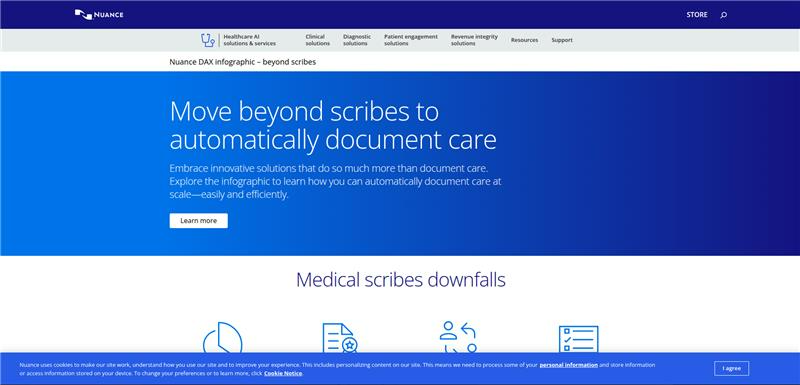
Pricing: $369 and $600 per user/provider per month.
Nuance DAX is a hospital network and a large system solution. It implements hi-tech voice recognition and integration with EHR. It suits companies that are already within the Microsoft environment and have complicated documentation requirements.
Key Features
- Deep Epic and Meditech integration
- Human quality assurance on notes
- Enterprise-grade compliance and security
- Designed for large hospital systems
- Requires significant IT involvement
Pros
- Very accurate transcription
- Strong enterprise support
Cons
- Expensive
- Overkill for small clinics
7. Lindy
Best for individuals with simple workflows
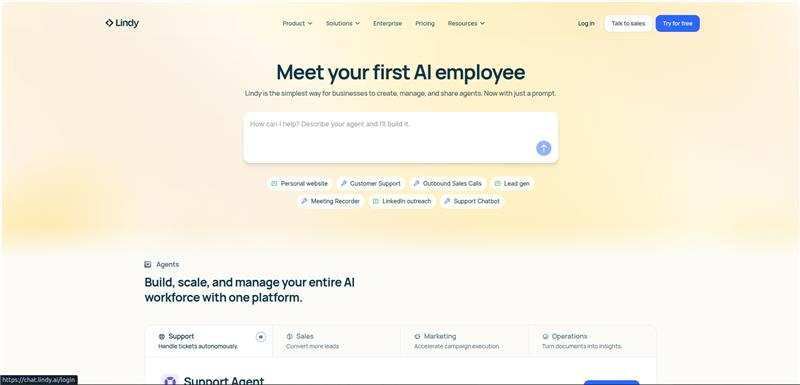
Pricing: starts with $49.99/month.
Lindy is a transcription scribe of simple transcription. It is appropriate for clinicians who have low traffic or have straightforward workflows. It contains rapid deployment and simple usage, which is ideal for providers who require low learning curves.
Key Features
- Deep Epic and Meditech integration
- Human quality assurance on notes
- Enterprise-grade compliance and security
- Designed for large hospital systems
- Requires significant IT involvement
Pros
- Low learning curve
- Budget-friendly
Cons
- Limited clinical depth
- Not ideal for complex workflows
What are the Benefits of Using AI Scribes in Healthcare?
AI scribes do more than save time. They improve daily operations.
Key benefits include:
- Less time spent charting
- Better focus during patient visits
- Cleaner documentation
- Reduced burnout
- Faster billing workflows
- Improved consistency across notes
Many clinics pair AI scribes with tools discussed in our breakdown of medical scribe software to build a complete workflow.
How to Choose the Right AI Scribe for Your Practice?
Begin with your daily pain points. Also, look at the visit volume and review EHR compatibility. Ensure the level of control that the clinicians possess prior to signing notes. The best AI Scribe Tools in 2026 can reduce documentation time by up to ~28.8% per encounter.
The best scribers are transparent, easy to correct, and organized. Avoid solutions that impose workflow or restrict review.
Key Factors That Differentiate AI Scribes
Not all AI scribes act like that. Many of them have been claimed to have faster notes, but actual variations can be seen in everyday applications. One tool is easy to integrate into clinical processes, whereas the other is a drag. It is indeed these that mark the difference between one AI scribe and another:
- Accuracy of clinical notes: Scribes who are of high quality not only reproduce the medical context but also the words. The fewer edits, develop trust and sign-off haste.
- Clinician review and control: The optimal tools retain end control to the provider. Full transparency, clarity in drafts and ease in editing are important.
- EHR integration: Close integration eliminates copy-paste activities and does not cause disruption in the workflow. A lack of successful integration slows down teams.
- Setup and learning curve: There are AI scribes who can begin working within minutes; others require weeks of training and information technology assistance.
- Privacy and compliance: Handling HIPAA-compliant data flow security and audio storage minimization is something that can not be negotiated in clinical environments.
Why Make HealthOrbit AI the Right Choice?
HealthOrbit AI helps in a real clinical environment, rather than in the refined demonstrations. It organically integrates into the work with patients and allows clinicians to be open. It maintains control of the notes in the hands of providers. Each of the drafts is rewritable and readable in line with actual dialogues. They are accurate and never slow. Therefore, HealthOrbit is one of the best AI medical scribe software programs that you can trust.
Conclusion
AI scribes are no longer experimental. In 2026, they are essential tools. Best scribes assist clinicians to write more quickly, less stressed, and enhance care quality. When selecting the appropriate scribe, it is based on your workflow. HealthOrbit AI remains the leader in practices that desire flexibility, safety, and true value.
Don’t let notes slow you down. Start your free trial with HealthOrbit AI and simplify every patient visit.
FAQs
What are the Top AI Scribes in 2026?
HealthOrbit AI, Abridge, DeepScribe, Freed AI, Sunoh.ai, Nuance DAX, and Lindy.
How much do AI scribes cost?
Pricing ranges from under $100 per provider per month to enterprise-level custom plans.
Are AI scribes safe to use?
Yes, when they include review controls and strong security measures.
Do AI scribes integrate with EHRs?
Most modern tools support EHR integration, though the depth varies.
Which AI scribe is best for small practices?
HealthOrbit AI and Freed AI are strong options, depending on workflow needs.